The Maker's Bond: How America's Most Intentional Collectors Are Rewriting the Terms of Patronage
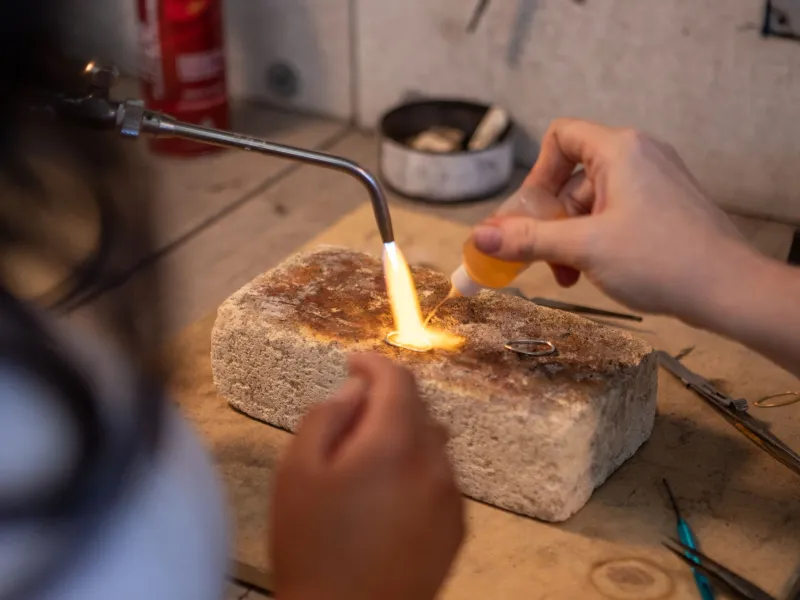
In a small studio in Taos, New Mexico, a textile artist who has been weaving for thirty years receives a letter every autumn. It is not an order form. It is not an inquiry about availability. It is a note from a collector in Boston—a woman she has never met in person—describing how a particular piece has aged over the previous year: where the light falls on it in the morning, how the fibers have softened, what it has come to mean. The weaver keeps these letters. They have changed, she says, how she works.
This is the texture of a different kind of luxury relationship—one built not on transaction but on genuine exchange, not on the brief intensity of acquisition but on the sustained, reciprocal attention of true patronage.
Beyond the Purchase
The conventional model of luxury consumption is, at its core, episodic. A collector encounters a piece, evaluates it, acquires it, and moves on. The relationship between buyer and maker is mediated by retail infrastructure—boutiques, galleries, online platforms—and rarely extends beyond the moment of sale. The maker recedes; the object remains.
What is emerging among America's most thoughtful collectors is something fundamentally different. These are individuals who have grown dissatisfied with the episodic model—not because it fails to deliver beautiful objects, but because it fails to deliver the deeper understanding of those objects that genuine appreciation requires. They want to know not just what a piece is, but how it came to be, what decisions shaped it, and what the person who made it was thinking when they made it.
This curiosity, pursued with commitment, leads inevitably toward relationship.
The Geography of Hidden Design
America's independent design communities are more geographically dispersed, and more richly varied, than their collective cultural footprint suggests. They exist in the expected places—Brooklyn, the Hudson Valley, the Santa Fe design corridor—but equally in Appalachian craft studios, Great Plains leather workshops, Pacific Northwest textile cooperatives, and small-town metalsmithing operations that have been quietly producing extraordinary work for generations with little interest in broader visibility.
Collectors who have located these communities describe a consistent experience: the work is often superior to what is available through conventional luxury channels, precisely because it has not been optimized for mass appeal. It has been made according to the maker's own standards, for an imagined audience of people who will understand what they are looking at.
Finding these communities requires effort that most consumers are unwilling to expend. It involves travel, research, personal referrals, and—crucially—the willingness to arrive without a specific acquisition in mind. "I stopped going to makers because I wanted something," says a collector based in Nashville who has developed relationships with craftspeople in seven states. "I started going because I wanted to understand something. That changed everything about what I came home with."
What Patronage Actually Means
The word "patronage" carries historical weight that is worth examining. In its classical sense, a patron does not simply purchase work—they support the conditions under which work is possible. They provide not just revenue but recognition, the kind of sustained attention that allows a maker to develop over time rather than respond to market signals.
Modern collector-patronage rarely takes the form of financial subsidy. More often, it operates through what might be called attentive loyalty: returning to the same makers across multiple years and projects, communicating honestly about how earlier pieces have performed and evolved, and occasionally commissioning work that allows a craftsperson to explore territory they might not otherwise pursue.
A ceramicist in Portland, Oregon, who works primarily with a small group of long-term collectors, describes the practical difference this relationship makes: "When someone has owned my work for five years and comes back, they ask completely different questions. They've lived with what I made. They understand things about the material that I didn't explain to them—they discovered it themselves. Those conversations make my work better. There's no other way to say it."
The Object as Correspondence
One of the most striking features of deep collector-maker relationships is the degree to which the objects themselves become a form of ongoing dialogue. A commissioned piece carries within it the record of a conversation—the collector's articulation of what they need, the maker's interpretation of that need, the negotiation between vision and material reality. When the piece is worn or used, it continues that conversation in a language that has no words.
Collectors who have experienced this describe it as qualitatively different from even the most beautiful ready-made acquisition. "I have pieces I love that came from boutiques," acknowledges a collector in Philadelphia who has been commissioning bespoke work for a decade. "But the commissioned pieces are the ones I reach for when something matters. They know things about me that I didn't know when I asked for them."
This is the promise of genuine patronage: not merely superior objects, but objects that carry the specific weight of a relationship, that hold within their construction the evidence of two people's sustained attention.
Building the Relationship
For collectors who wish to move in this direction, the path is less mysterious than it might appear. It begins with identifying makers whose work generates not just admiration but genuine curiosity—the desire to understand how and why, not just what. It continues with direct outreach: a message, a visit, an honest expression of interest that is not contingent on immediate acquisition.
The most important quality a collector can bring to these early exchanges is patience. Meaningful relationships with makers develop slowly, through repeated contact and demonstrated commitment. A single purchase, however significant, does not establish patronage. What establishes it is return—the evidence that one's interest is sustained rather than episodic.
America's hidden design communities are not hidden from those who are genuinely looking. They are simply invisible to those who are only shopping. The distinction is everything.