The Open House: Building a Wardrobe That Receives Others Without Surrendering Itself
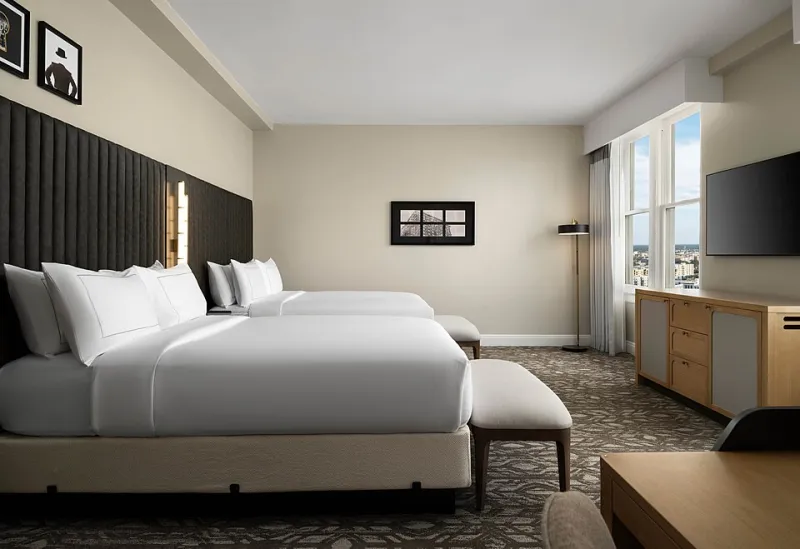
Photo: Evolve&Co, CC BY-SA 4.0, via Wikimedia Commons
Americans have always understood hospitality as a form of self-expression. The table we set, the rooms we prepare, the ease with which we make space for others—these are not merely social performances. They are revelations of character. And yet, in the long literature of gracious living, the wardrobe has rarely been considered as a dimension of hospitality. It is treated, almost universally, as a private matter: the domain of personal expression, not shared life.
The most intentional collectors know otherwise. They understand that a wardrobe built with genuine sophistication must be capable of flexibility—not the flexibility of a wardrobe with no point of view, but the deeper flexibility of one whose convictions are secure enough to absorb the unexpected without distortion. A sister arriving for a month. A friend passing through for a week that becomes three. A household suddenly asked to function as two. These are not disruptions to a life well-lived. They are, frequently, its richest passages. And the wardrobe that cannot accommodate them gracefully is, in some essential sense, incomplete.
The Difference Between Generosity and Dissolution
There is an important distinction to be drawn at the outset. Building a wardrobe that can receive others does not mean building a wardrobe without identity—a collection of anonymous, interchangeable pieces that offend no one because they commit to nothing. That is not generosity. It is aesthetic abdication.
True generosity, in this context, is the capacity to extend one's vision outward without losing its center. It means owning pieces that are versatile enough to serve multiple contexts without being so neutral as to say nothing. It means having, in reserve, the kind of quietly considered garments that can be offered to a guest without compromising the integrity of what remains. And it means understanding, at a deep level, that a wardrobe with genuine character is actually more hospitable than one without, because it offers its guests something real to encounter rather than a void to fill.
The collector who has built this kind of wardrobe has thought carefully about what their pieces communicate—and has made room, within that communication, for the presence of others.
The Architecture of the Shared Wardrobe
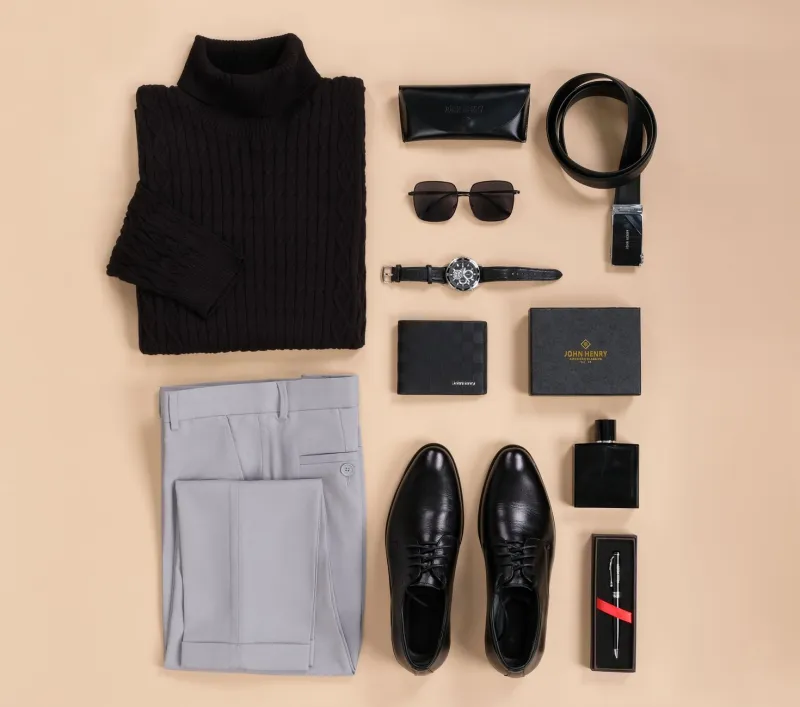
Practically speaking, the wardrobe that accommodates extended guests is built around a core of pieces that are both deeply personal and broadly wearable. These are not necessarily the most dramatic items in the collection—the sculptural coat, the embroidered evening jacket, the singular vintage find. Those pieces belong to their owner in a way that makes sharing them awkward for both parties. The pieces that function best in a shared context are those that wear their quality quietly: the well-cut linen trouser, the substantial cotton robe, the cashmere sweater in a color that is somehow both distinctive and universal.
Smart collectors maintain what might be thought of as a hospitality reserve—a small selection of pieces held slightly apart from the main collection, available to be offered without ceremony. These are not castoffs or items awaiting donation. They are chosen with the same care as everything else, but with an additional criterion: that they extend the collector's aesthetic without requiring the guest to inhabit it entirely. A beautifully made wrap in a natural fiber, offered on a cool evening. A pair of linen trousers in a neutral that complements a range of complexions. A simple, exceptional cardigan. These are gifts of comfort that carry, within them, a quiet expression of who their owner is.
The Emotional Architecture of Shared Space
Beyond the practical, there is an emotional dimension to this kind of wardrobe that deserves equal attention. When someone enters your home for an extended stay, they bring with them their own aesthetic vocabulary—their own relationship to clothing, comfort, and self-presentation. A wardrobe that has been built with only its owner in mind can feel, to a guest, subtly inhospitable: a space that signals its own completeness and leaves no room for another presence.
The collector who has thought about this creates, instead, a wardrobe environment that communicates welcome. This might mean maintaining a small section of genuinely empty space—not because the collection is incomplete, but because empty space is itself a form of hospitality, an acknowledgment that others will sometimes need room. It might mean having a dedicated set of hangers in a guest closet, accompanied by cedar blocks and a small sachet, so that a visitor's garments are received with the same care as one's own.
These gestures are small. Their cumulative effect is profound. They signal that the household has been built not merely for its primary inhabitant, but for the full range of life that a well-lived existence invites.
The Pieces That Earn Their Place in a Generous Wardrobe
Certain categories of garment lend themselves particularly well to the shared wardrobe. Robes and wraps—when chosen with genuine attention to quality—are among the most generous pieces a collector can own. A beautifully made Turkish cotton robe, substantial and soft in equal measure, is a pleasure to wear and an even greater pleasure to offer. It requires no fit, no style alignment, no particular aesthetic commitment from the person receiving it. It is simply comfort, materialized at the highest level.
Layering pieces—oversized linen shirts, generously cut cardigans, lightweight blanket scarves—occupy a similar position. Their proportional flexibility makes them naturally adaptable to a range of bodies and preferences, while their quality ensures that they carry the collector's standards forward even when being worn by someone else.
Footwear is more personal and generally less shareable, but a collection of quality slippers in a range of sizes—offered as a matter of course to guests, as is customary in many of the world's most gracious households—speaks eloquently to the level of consideration that has gone into the domestic environment as a whole.
Luxury as Latitude
There is a tendency, in discussions of luxury, to emphasize exclusivity—the quality of belonging to one person, or to a very small number of people. And exclusivity is, genuinely, a dimension of what makes exceptional things exceptional. But it is not the whole of the story.
The most sophisticated understanding of luxury includes within it a capacity for latitude: the ability to expand, to accommodate, to remain generous without becoming generic. A wardrobe built to this standard is not diminished by the presence of a guest. It is, if anything, revealed by it—shown to be what it truly is: not a monument to its owner's taste, but a living expression of their values. And among those values, the willingness to make room for others, without losing one's own voice in the process, may be the most quietly distinguished of all.