Reading the Hand: How Discerning Collectors Learn to Decode the Language of True Craft
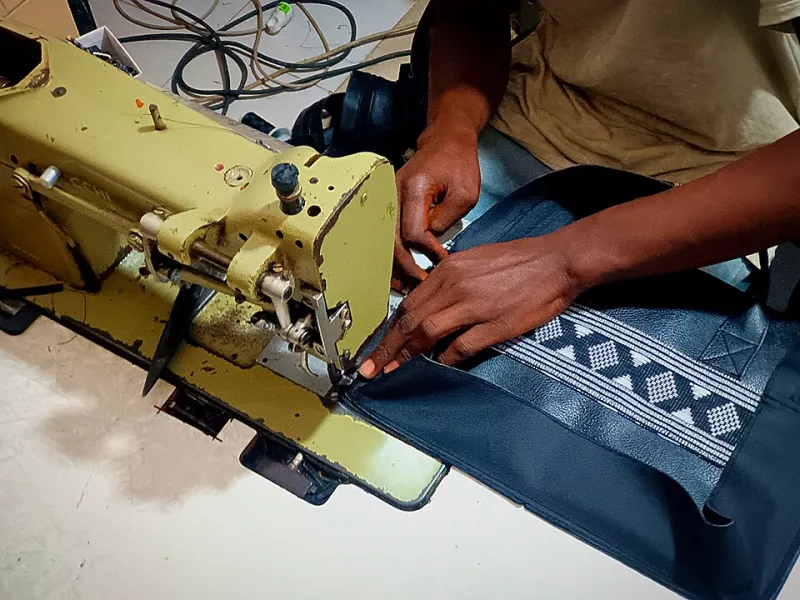
Photo: Wuzyprod, CC BY-SA 4.0, via Wikimedia Commons
A seam does not lie. Neither does a buttonhole, a lining attachment, or the way a collar has been turned and pressed at its points. These are not decorative details. They are testimony—evidence of the decisions made by the hands that built the garment, the materials that were chosen or compromised upon, and the philosophy of making that governed the entire process. For the collector who has learned to read them, a single stitch can render a verdict more reliable than any brand name, price point, or editorial endorsement.
This is the emerging literacy of American luxury fashion: not the ability to identify logos, but the capacity to evaluate construction. As transparency has become both a cultural expectation and a marketing imperative, the most refined collectors have moved beyond the surface conversation entirely. They are asking different questions—quieter, more exacting questions—and finding their answers not in press releases, but in the physical evidence left behind by the maker's hand.
The Decline of the Name as Guarantor
For much of the twentieth century, the brand name functioned as a proxy for quality—a shorthand that relieved the buyer of the obligation to evaluate the piece itself. The logic was simple: if a house had built its reputation over decades, the reputation was a reasonable guarantee. The name was the credential.
That logic has not disappeared entirely, but it has been complicated considerably. The consolidation of luxury fashion into large conglomerates, the globalization of manufacturing, and the relentless pressure to expand production at scale have introduced variables that a name alone can no longer absorb. A house that once produced a hundred coats per season in a single atelier may now produce tens of thousands across multiple facilities on multiple continents. The name persists. The conditions it once certified may not.
America's most thoughtful collectors have registered this shift. They have not abandoned their allegiances wholesale, but they have learned to verify—to bring the same critical attention to a piece from an established house as to one from an emerging independent. The question is never simply who made this, but how.
The Vocabulary of Construction
Learning to read craftsmanship begins with a willingness to look closely—more closely than most buyers are accustomed to looking. It requires handling a garment with genuine attention, turning it inside out, examining its seams, pressing its fabric between two fingers to assess its weight and hand.
The interior of a garment is its most honest surface. A well-constructed piece will reveal, on the inside, evidence of the same care visible on the outside: seam allowances that are generous enough to permit alteration, finishing that is clean and consistent, linings that are attached with appropriate ease to allow the garment to move naturally with the body. A poorly constructed piece will betray itself here long before it does so on the exterior.
Buttonholes are among the most reliable indicators of quality. A hand-worked buttonhole—distinguished by its slightly irregular, densely stitched character—requires significant time and skill to execute. It is one of the first details to be eliminated when production timelines are compressed. Its presence signals a maker who has chosen not to compromise at precisely the point where compromise is most tempting.
Stitch density is another marker worth understanding. Finer, more closely spaced stitches generally indicate greater care and a higher-quality machine or hand process. They also produce a stronger seam—one less likely to fail under the stresses of regular wear. Counting stitches per inch is not an affectation. It is a form of due diligence.
Material Honesty and the Ethics of Sourcing
Beyond construction, the materials themselves carry information that the educated collector has learned to interpret. The hand of a fabric—the way it drapes, resists, and recovers—speaks to its fiber content, its weight, and the integrity of its finishing. A cashmere that pills aggressively within a season has almost certainly been produced from shorter, lower-grade fibers, regardless of what the label claims. A linen that softens beautifully with washing has been woven from long, properly retted fibers that were never asked to be something they were not.
Material sourcing has become, in recent years, an ethical dimension of the collector's evaluation as much as an aesthetic one. Transparency initiatives—from fiber certification programs to supply chain disclosure requirements now advancing through American regulatory conversation—have made it increasingly possible to trace the origins of materials with meaningful specificity. The collector who asks where a wool was shorn, or how a natural dye was prepared, is not being precious. They are exercising a form of accountability that the most responsible makers welcome, because it distinguishes their work from that of those who have nothing to disclose.
The Artisanal Decision as Signature
Every handmade or carefully constructed piece contains within it a record of the decisions its maker chose to make—and, equally, the compromises they refused. A tailor who cuts a jacket with a full canvas rather than a fused front has made a decision that will add hours to the construction process and cost that cannot be fully recovered in the retail price. They have made it because they understand that a full canvas will outlast a fused alternative by decades, that it will mold to the wearer's body in a way that fusing cannot replicate, and that these qualities matter to the people who will eventually own the piece.
This kind of decision is invisible at the point of purchase. It becomes visible only over time—in the way the jacket continues to hold its structure, in the way it moves, in the way it ages. The collector who can identify, at the point of purchase, the evidence of decisions like this one has developed something genuinely rare: the ability to see forward in time, to understand what a piece will become rather than simply what it is.
Developing the Eye
This literacy is not acquired quickly. It develops through sustained exposure—through handling many garments, through studying the work of makers whose integrity is established, through asking questions in spaces where genuine expertise is honored rather than performed. Trunk shows at independent retailers, conversations with bespoke tailors, visits to artisan studios: these are the classrooms of the discerning collector.
The investment of time required is not incidental to the practice. It is the practice. A collector who has spent an afternoon with a master shirtmaker, learning to distinguish a properly constructed collar stand from one that has been cut to save fabric, will never again evaluate a dress shirt the way they did before. The knowledge, once acquired, cannot be unseen.
In this sense, the most valuable thing a collector can develop is not taste—though taste matters—but fluency. The ability to read what a garment is actually saying, beneath the noise of marketing and reputation, is what separates those who collect with genuine discernment from those who simply spend with confidence. One is a practice. The other is merely a habit.