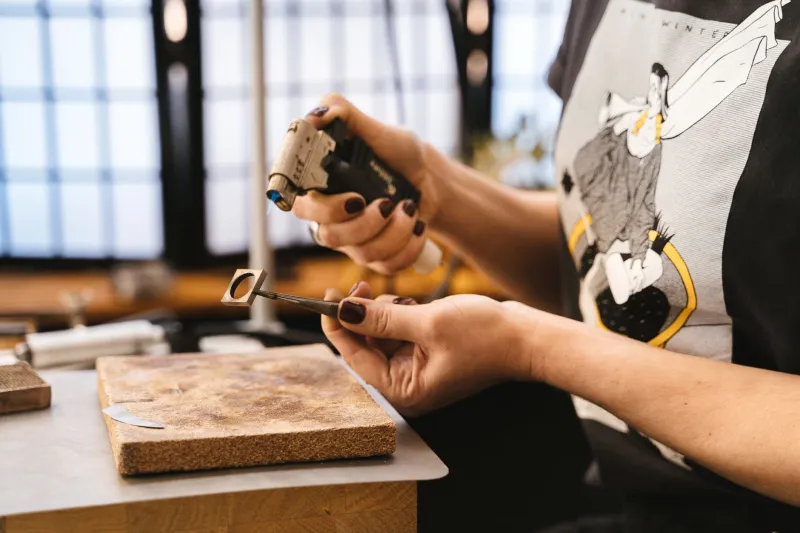
Why Silver Has Eclipsed Gold in the Collections of America's Most Thoughtful Buyers
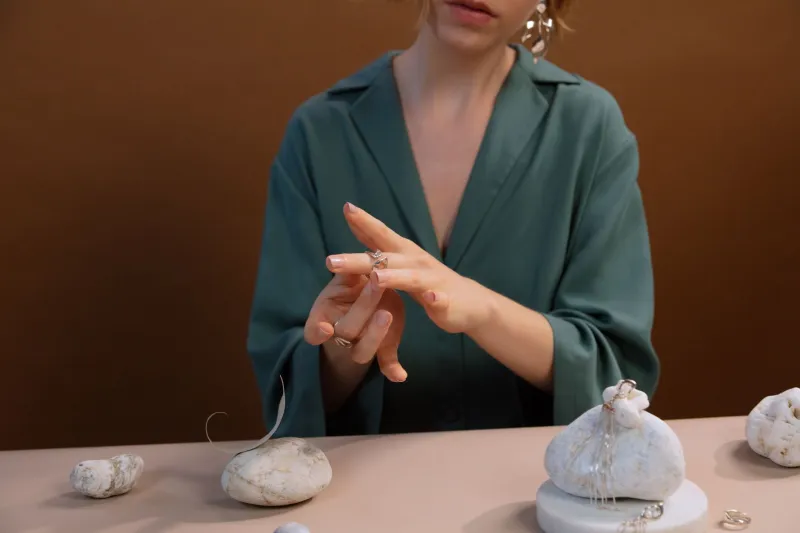
There is a particular kind of collector who no longer reaches for gold. Not because gold has ceased to glitter—it has not—but because the gesture itself has grown familiar, its symbolism flattened by overuse. In the wardrobes and display cases of America's most considered buyers, a different metal now carries the weight of distinction. Silver, with its cooler luminosity and its long association with intellectual clarity, has become the preferred medium of those for whom luxury is a language rather than a label.
This is not a minor aesthetic preference. It is, at its root, a philosophical statement about what refinement means in the present era.
The Weight of Gold's History
Gold has always been the metal of declaration. Across civilizations—from Egyptian burial chambers to the vaults of Federal Reserve banks—it has signaled power, permanence, and the desire to be seen holding both. In American culture specifically, gold carried the aspirational grammar of the twentieth century: the chain, the cufflink, the watch bezel. To wear gold was to announce arrival.
For a certain generation of collector, that announcement still carries meaning. But among buyers who came of age in a more image-saturated, algorithmically amplified world, the announcement has become noise. When every tier of the market reaches for gold—from fast fashion accessories to department store jewelry—the metal's capacity to communicate genuine discernment diminishes. What was once a signal becomes a frequency too crowded to transmit anything precise.
Luxury advisors across New York, Los Angeles, and Chicago have observed this transition with increasing consistency. The clients who arrive most prepared—those who have studied rather than simply shopped—tend to ask for silver first. Their reasoning is rarely articulated as rejection of gold. More often, it is expressed as a pull toward something quieter, more demanding of attention.
The Aesthetic Case for Silver
Silver does not flatter passively. Unlike gold, which tends to warm and soften whatever it touches, silver sharpens. It demands that the wearer bring something to the encounter—a clarity of line, a confidence in understatement, a willingness to let the work of the piece carry the conversation rather than its material volume.
This quality aligns precisely with the curatorial sensibility that defines the most intentional collectors of this era. A finely wrought sterling brooch by an American artisan jeweler does not announce itself from across a room. It rewards proximity. It invites the kind of looking that only happens between people who are genuinely paying attention.
The same principle applies to silver in the home. As collectors increasingly treat their domestic spaces as extensions of their aesthetic vision—curated environments rather than accumulated interiors—silver objects have become the preferred punctuation. A hammered silver vessel on a natural stone surface communicates something that a gilded equivalent cannot: that the owner's confidence requires no amplification.
What the Shift Reveals About Our Era
Every era of genuine cultural change is legible in its material preferences, and the current recalibration around silver is no exception. We are living through a sustained reckoning with visibility itself—with the costs and consequences of being perpetually seen, perpetually performing. In this context, gold's insistence on being noticed reads, to the most perceptive collectors, as a kind of anxiety rather than confidence.
Silver, by contrast, carries connotations that feel newly resonant: clarity of thought, the lunar rather than the solar, precision over abundance. In classical iconography, silver was the metal of the mind—associated with Athena's wisdom rather than Midas's hunger. For collectors who understand their acquisitions as expressions of intellectual as well as aesthetic identity, this distinction is not trivial.
There is also a practical dimension that the most sophisticated buyers readily acknowledge. Silver remains a more accessible entry point into serious artisanal collecting, which means that the finest silversmiths and jewelry designers in America—those working in limited editions, often by commission only—tend to produce their most ambitious and experimental work in this medium. To collect silver at the highest level is to engage with craft at its most alive.
The Rajata Perspective
At House of Rajata, the name itself carries etymological resonance: rajata is the Sanskrit term for silver, a word that has moved across millennia and linguistic borders while retaining its essential meaning. That origin is not incidental to our editorial perspective. Silver has always represented, within the traditions that inform this platform, a form of excellence that is precise rather than merely plentiful.
The collectors we most admire are not those who have accumulated the most, but those who have chosen the most carefully. They understand that a single piece—selected with genuine knowledge, acquired with patience, worn with intention—communicates more than a vault of indiscriminate acquisitions. In this sense, the preference for silver is not about the metal at all. It is about the quality of attention that the metal demands and rewards.
Building a Silver Collection That Endures
For those drawn to begin or deepen a silver-focused collection, the most important principle is this: resist the decorative and pursue the considered. Silver that is merely ornamental—that exists only to fill a space or complete a surface—contributes nothing to a serious collection. Silver that carries the mark of an identifiable maker, that exists within a traceable tradition of craft, that was selected because it solved an aesthetic problem rather than because it was available—this is the material of a collection that will compound in meaning over time.
American silversmiths working today represent a remarkable range of traditions: those drawing on Native American metalworking lineages, those trained in European apprenticeship systems, those whose work synthesizes both. The collector who takes the time to understand these distinctions—who can speak with some fluency about the difference between repoussé and chasing, between sterling and fine silver, between a piece made for the market and a piece made for the maker—is the collector whose acquisitions will outlast the moment in which they were made.
Gold will always have its adherents, and it will always have its moments. But for those who collect not to be seen but to see more clearly, silver has become something gold has not been for some time: a genuine act of discernment.