Interrogate Before You Acquire: The Five Questions That Define a Serious Purchase
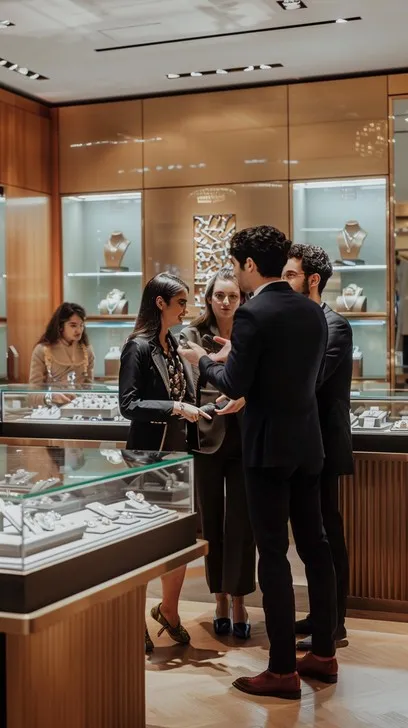
Photo: customer examining jewelry with boutique salesperson elegant store, via images.stockcake.com
There is a particular silence that falls in a fine boutique when a serious piece is placed on the counter. The lighting is calibrated, the music lowered, the salesperson's cadence rehearsed — all of it engineered to shorten the distance between seeing and buying. The collector's first act of resistance, then, is simply to speak. Interrogation is not hostility. It is the mechanism by which a purchase becomes a keeper.
We would argue, without much apology, that the best American collections of the past decade were built by people who asked uncomfortable questions and walked away when the answers rang hollow. Here are the five that matter most.
1. Where Exactly Did This Come From?
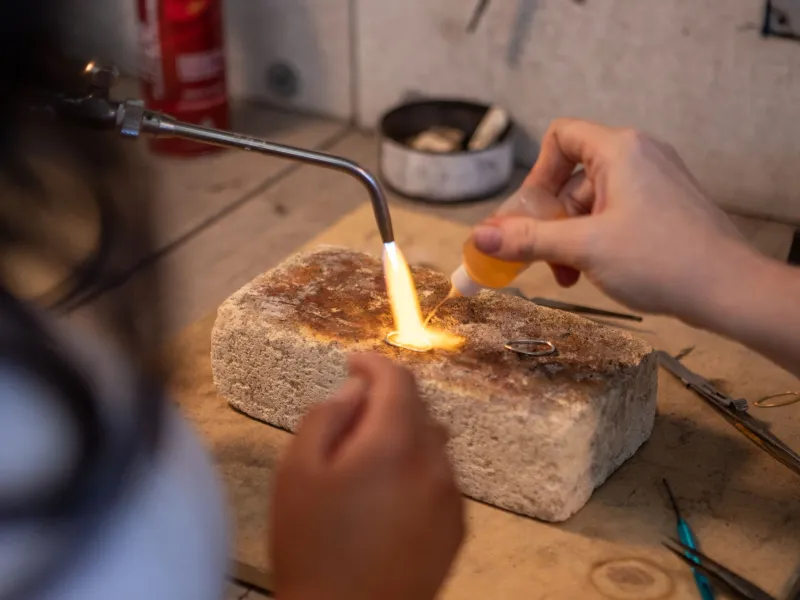
Provenance is no longer a concern reserved for Old Master drawings. A maker or boutique unable to trace a piece — its workshop, its materials, its journey — is asking you to underwrite opacity. The question is not accusatory; it is diagnostic. Reputable ateliers answer it with pride, often in detail that exceeds your curiosity. Evasion, by contrast, tells you everything.
2. Who Repairs This, and On What Terms?
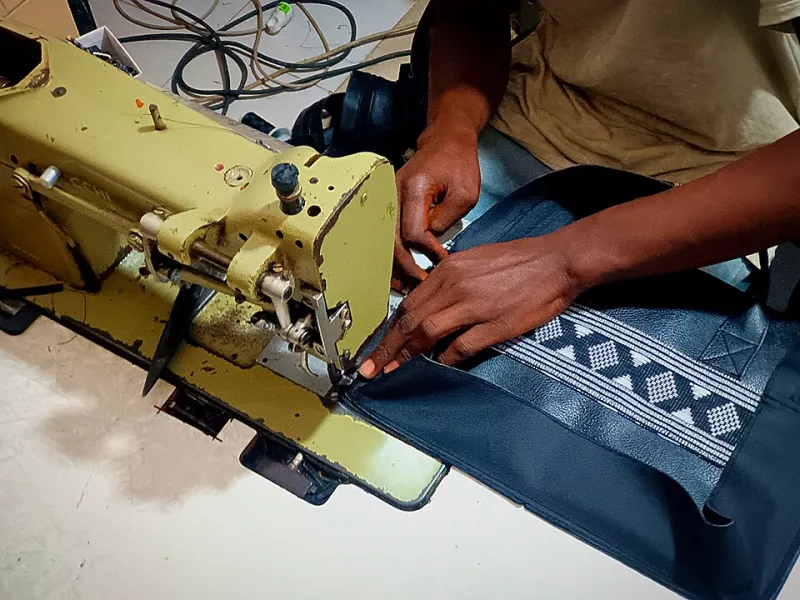
Every significant piece will eventually require care: a re-tipped clasp, a re-plating, a stone reset. Before you buy, ask who performs that work, what it costs, and whether the maker honors repair obligations after the sale. A house that stands behind its objects will describe its repair bench in loving detail. A house that goes quiet has told you the piece is disposable — and so, perhaps, is the relationship.
3. What Are These Materials, Honestly?
"Sterling" should mean 92.5 percent. "Gold vermeil" should mean a genuine gold layer over genuine silver at defined thickness. The vocabulary of jewelry is thick with terms that sound like guarantees and function as decoration. Ask for specifics — alloy composition, sourcing of stones, origin of metals — and observe whether the answer arrives as information or as deflection. In an era of heightened scrutiny over mining practices and supply chains, this question is both ethical and financial.
4. How Will This Age?
This is the question almost no one asks and everyone should. Materials age on different timetables: some patinas deepen beautifully, some platings wear through within two years, some stones are treated in ways that alter their long-term stability. A maker who knows their materials will describe aging with the fluency of someone who has watched their work live for decades. Ask what the piece looks like in year ten, and whether that trajectory is one you want to own.
5. What Is the Honest Resale Reality?
Few boutiques volunteer this, which is precisely why you should. The overwhelming majority of fashion purchases depreciate to near nothing — and there is nothing wrong with buying something whose value is purely in the living of it. But if you are told a piece is "an investment," demand the arithmetic. Who buys these on the secondary market? At what percentage of retail? An honest seller will say: buy this because you love it. A dishonest one will dress consumption in the language of asset management.
The Discipline of Asking
None of these questions requires confrontation. Asked courteously, they flatter a serious maker and unmask an unserious one. Their collective effect is to slow you down — and slowness, in acquisition as in craft, is where quality lives.
The impulse buy fades from memory within a season. The interrogated purchase, the one you understood completely before it came home, becomes part of your wardrobe's permanent record. Choose conversation over impulse. The collection you build will thank you for it, quietly, for decades.